World Cup Musings 2
Scotland’s Caution and the Cult of the Touchline Eccentric

Scotland’s Familiar Failings
As someone with Scottish heritage, I have always tended to favour Scotland over England, not least because I have a soft spot for the underdog in almost any sporting scenario. Realistically, with Brazil and Morocco in their group, qualification for the last 32 was always going to be a steep climb. Expectations, as usual, were modest.
Yet, as many commentators have noted, it was the nature of the exit that rankled: not simply the defeats, but the complete absence of ambition. Against Haiti, the Scots spent the second half defending an early goal against a valiant, plucky side who, player for player, should not have been within reach — let alone a hair’s breadth from equalising.
The performance against Morocco was not dreadful, but the Atlas Lions were barely stretched beyond a couple of half-hearted penalty appeals. Brazil should, of course, beat Scotland 99 times out of 100. But the abject defending that gifted goals to Vinícius Junior, combined with a blunt attack that failed to lay a glove on a far-from-vintage Seleção, left the impression of a team still not ready to compete at this level.
Qualifying for two Euros and a World Cup has given thousands of Scottish fans their first chance to follow the national side at a major finals, and that is no small achievement after the barren noughties. But across all three tournaments, the performances have too often been clumsy, cautious and ponderous. Scotland’s best players have largely failed to impose themselves.
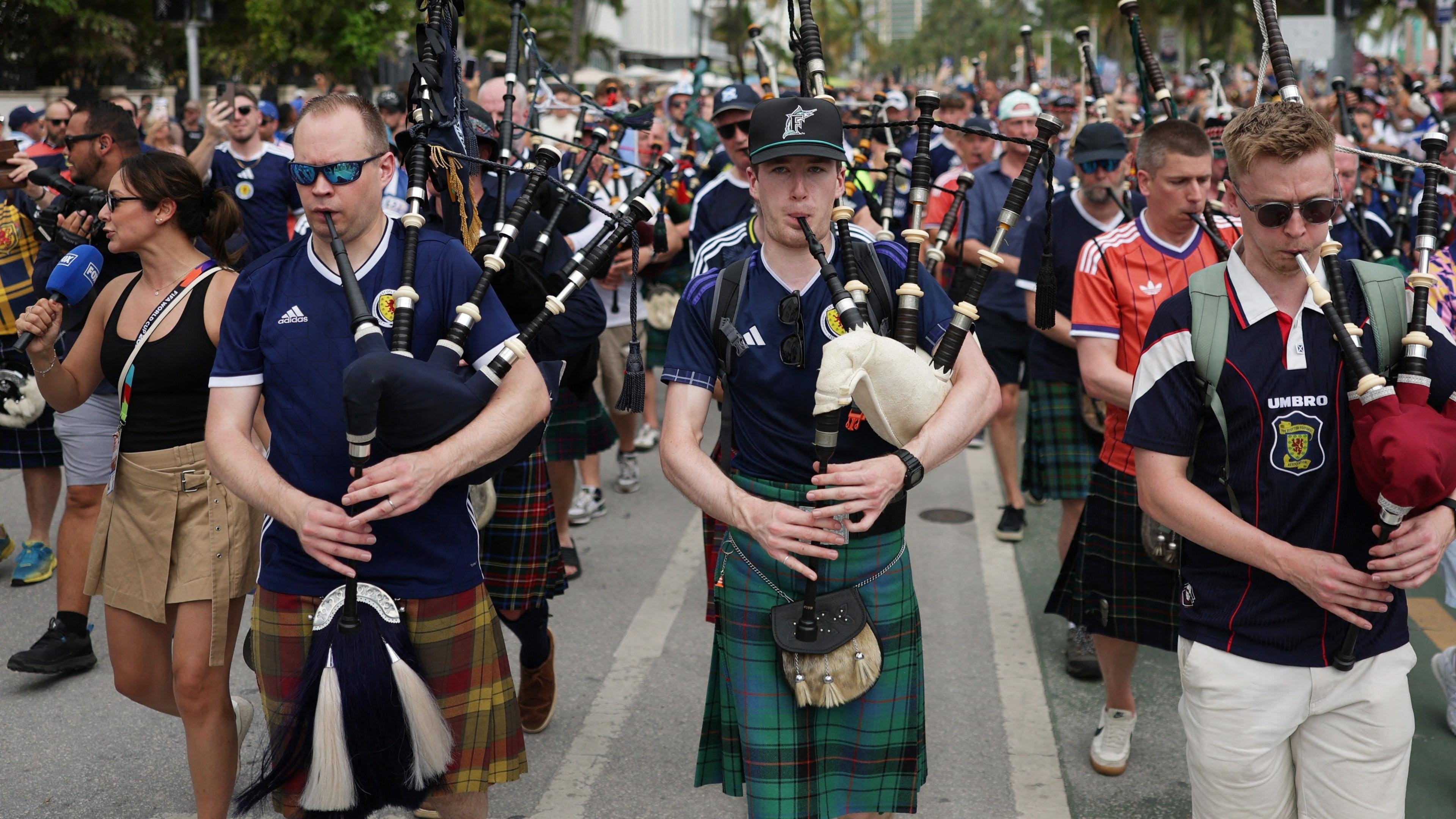
Yes, there are players in the squad who cannot get a game in the English Championship. But there are also regular Premier League starters, along with others playing in Serie A and elsewhere. The likes of Iraq, Iran, Cape Verde, Curaçao, South Africa and DR Congo have all left a mark: goals, adventure, wins, losses and moments that will linger. Beyond the Tartan Army — and perhaps the bartenders of Miami and Boston — who will remember Scotland’s contribution in years to come?
Manager Watch
One of the more memorable features of Scotland’s campaign was the curmudgeonly theatre of their now former manager, Steve Clarke. His curt interviews and general demeanour — that of a man dragged unwillingly to his wife’s friend’s wedding — did him little credit. That all was not entirely well was underlined by his swift resignation. In the latter days of his reign, he seemed to be channelling the miser in Kidnapped. It required little imagination to picture him in a tower house, wearing a nightcap, with a single candle flickering faintly in the corner to save money.

Elsewhere, the touchlines have supplied a fine cast of characters. Among them was the 78-year-old “Little General”, Dick Advocaat, whose Curaçao side entertained despite their manager’s glowering pitch-side presence.
South Africa’s Hugo Broos is four years his junior but can take satisfaction from guiding a workmanlike Bafana Bafana side into the last 32. This is his 13th, and apparently final, managerial role. He has the air of a world weary detective in the 1960s television adaptation of Maigret, and frankly anyone who began his career at the wonderfully named Molenbeek cannot, in my view, be a bad bloke.

The two greatest touchline characters so far, however, include one of my favourite shadowy figures: Tunisia’s Hervé Renard. A true football mercenary, Renard has managed 16 club and national sides, mainly — though not exclusively — in the French-speaking world. He arrived at the tournament after Sabri Lamouchi was harshly dismissed after a single game. Renard’s honours list includes two Africa Cup of Nations titles, but he looks less like a conventional coach than a suave bounder from a Graham Greene novel: unbuttoned shirt, immaculate hair, and the faint suggestion that he might be planning either a training session, a coup to remove the general or some elaborate financial impropriety.

Last but not least is Ecuador’s spectacular coach, the exotically coiffured Argentine Sebastián Beccacece. Dressed as if he has wandered straight off the set of Miami Vice, he carries himself like a minor French pop star from the 1980s.
Suit jackets with rolled-up sleeves, short-sleeved roll-neck jumpers and an explosive temperament have made Ecuador’s matches compelling viewing even before the football breaks out.
A friend who has held a Valencia season ticket for several years says one of La Liga’s pleasures is waiting for the inevitable moment when both benches erupt, the game loses its shape, and all discipline evaporates. Beccacece seems to begin from that point. His climb into the crowd after Ecuador’s winning goal against Germany — following an enormous leap for a small man — was sensational.
If the football occasionally disappoints, the men stalking the technical areas are doing their best to make up for it.